The campaign sets the configuration.
Match the marine spread to the route. Start with what the project needs.
Vessel selection and equipment configuration are confirmed through campaign planning. Explore the information that shapes each operational scope.
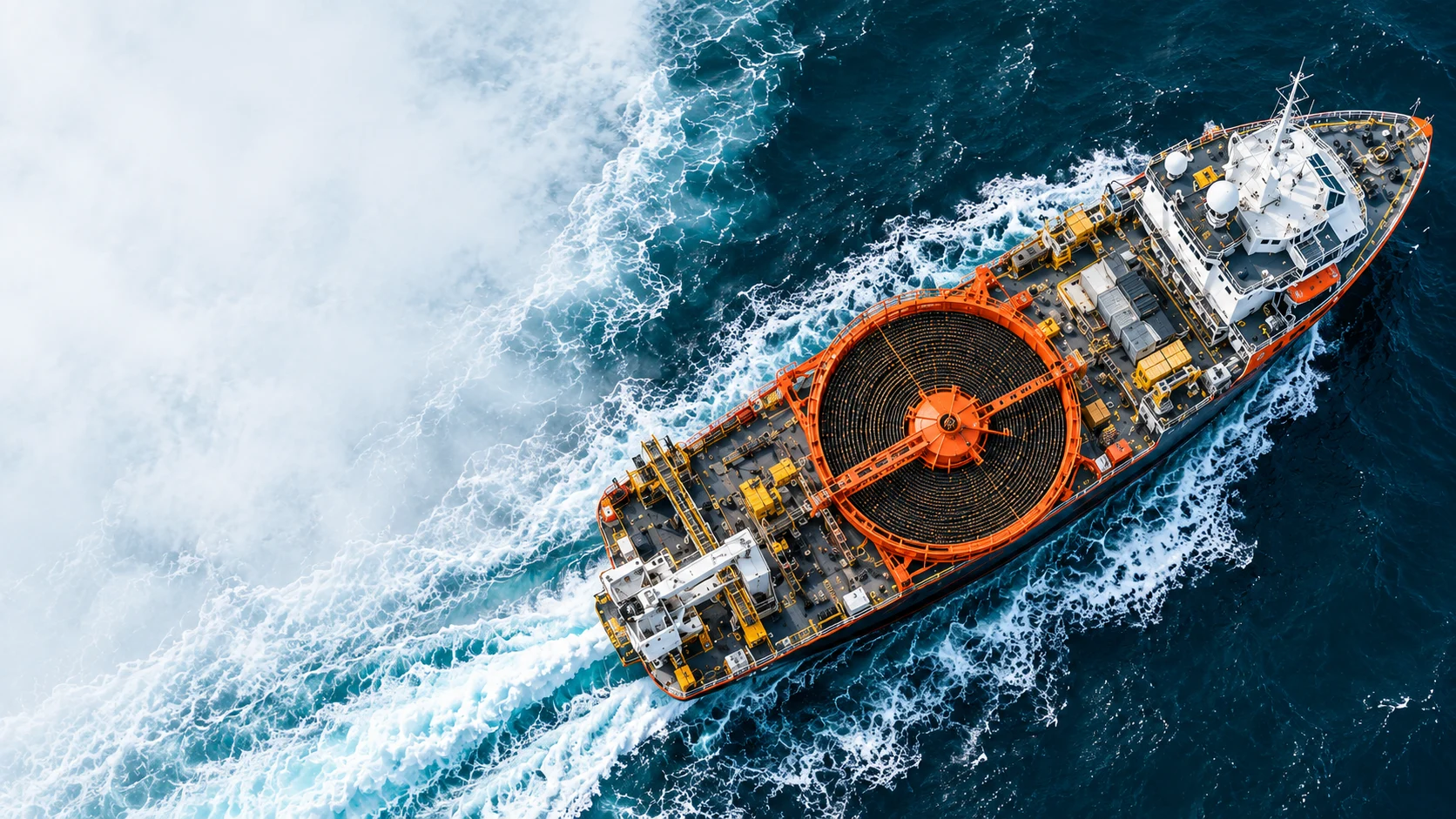 ILLUSTRATIVE VESSEL · CAMPAIGN PLANNING
Built around the cable system.
Handling requirements, storage, deck layout and the planned installation sequence shape the vessel configuration.
- Cable system
- Dimensions, mass and handling limits
- Campaign plan
- Load-out, transit and installation sequence
- Marine interfaces
- Port access, crossings and landfall handover
Built around the route questions.
Survey priorities follow the corridor, the seabed information already available and the decisions the project needs to make.
- Route corridor
- Alignment, constraints and existing data
- Survey priorities
- Information needed for engineering decisions
- Interfaces
- Crossings, landfalls and operational access
Built around the seabed conditions.
Protection methods and the equipment spread are assessed against the route, cable design and project acceptance criteria.
- Ground conditions
- Geophysical and geotechnical information
- Protection needs
- Hazards and section-by-section requirements
- Acceptance
- Verification and project criteria
Bring the route.
We’ll frame the questions.
Every campaign starts with a different level of detail. Use this checklist to organise what is available and what still needs to be resolved.
Download planning checklist↓- 01
Location & route
Corridor, water depth, seabed data, crossings and landfalls.
- 02
Cable & handling
Cable type, dimensions, handling limits and delivery arrangements.
- 03
Programme & outcomes
Target dates, scope boundaries and protection requirements.